SPECIAL REPORT | GLOBAL NEWS NETWORK (GNN) By: Alistair Thorne, Chief International Correspondent Date: September 14, 202X This news story is fictional, but this could happen.
SPECIAL REPORT | GLOBAL NEWS NETWORK (GNN) By: Alistair Thorne, Chief International Correspondent Date: September 14, 202X This news story is fictional, but this could happen.
BANDAR ABBAS, WEST IRAN
The air over the Persian Gulf is no longer thick with the tension of impending war; it is thick with the smell of diesel, saltwater, and the sterile scent of new beginnings. Behind me, the horizon is dominated by the gargantuan silhouette of the U.S. Seventh Fleet, their grey hulls standing as silent sentinels over the Strait of Hormuz.
But the real story isn't in the water. It is in the earth.
For three millennia, the Iranian plateau has been a fortress, guarded by the Zagros and Alborz mountains. But in a campaign that military historians are already calling "The Surgical Severance," the coalition forces did not try to climb the mountains. They redefined the ground itself.
The Rain of Steel
It began at 03:00 hours on a Tuesday. The world woke up to reports of "seismic anomalies" across central Iran. It wasn't an earthquake. It was Operation Obsidian Veil.
From the bellies of B-21 Raiders and a swarm of autonomous stealth bombers, thousands of "Golgotha Spikes"—deep-earth penetrating kinetic mines—were unleashed. These weren't traditional bombs designed to level buildings. They were tungsten-cased needles, designed to pierce five hundred feet of bedrock before detonating a sequenced series of thermobaric and electromagnetic charges.
"It didn't sound like a bombing," recalls Captain Marcus Thorne of the 101st Airborne, who was among the first wave of ground troops to enter the newly carved territory. "It sounded like the world was cracking in half. A low, guttural moan that vibrated in your teeth. We watched from the troop carriers as a line of fire literally zipped across the landscape, from the borders of Iraq to the heart of the plateau."
The result was a geological scar. The Golgotha Spikes created a "denial zone"—a strip of land ten miles wide and hundreds of miles long, where the earth had been turned into a pulverized, unstable wasteland of molten glass and active, sensor-triggered mines. To cross it was suicide. The barrier was impenetrable; no tank, no infantry division, and no guerrilla force could traverse the shattered crust without being vaporized.
Iran was not just invaded. It was bisected.
The Great Migration
With the East severed from the West, the coalition forces moved with terrifying speed. The ground invasion of the Western sector was less a battle and more a collapse. The Iranian Fourth Army, cut off from the command structures in the East, found themselves trapped in a pocket of land with an American-led coalition on their flank and a wall of fire at their backs.
But the victory came with a price that has sparked international outcry: the Mandatory Displacement.
Under the terms of the "Stability Accord," every single resident of the newly designated "West Iran" who refused to swear allegiance to the new provisional government was evicted. Millions of people—families, shopkeepers, students, and soldiers—were marched toward the shattered border, forced across the narrow, cleared corridors into the rump state of East Iran.
I stood at the "Gateway of Sorrows," one of the few cleared paths through the minefields, three days ago. The scene was biblical. A river of humanity, clutching suitcases and bundles of clothes, trekking toward a horizon of smoke.
"They told us we are 'liberated,'" whispered Zahra, a 42-year-old schoolteacher from Shiraz, her voice cracking as she looked back toward the west. "How is it liberation to be told my house is no longer mine? To be told that the land my father farmed for forty years is now a different country?"
A coalition soldier, young and visibly shaken, tried to hand her a bottle of water.
"Move along, ma'am," he said softly, his eyes avoiding hers. "For your own safety. You have to get to the East sector before the corridors close."
"Safety?" Zahra spat, though there was more grief than anger in her tone. "You have cut the heart out of the body and told the heart it is now a separate person. Where are we supposed to go? The East is a wasteland of refugees and ruins."
The New Order: West Iran
While the East descends into a chaotic struggle for survival, the West is being reborn in a sterile, American image.
In the newly established capital, the atmosphere is one of manic productivity. The remnants of the old regime’s iconography—the murals of the Supreme Leader, the religious slogans—have been scrubbed from the walls with industrial solvents. In their place are the blueprints of a new society.
The centerpiece of this transformation is the "Constitution of the Western Shore." Written by a committee of American constitutional scholars and hand-picked local collaborators, the document is a mirror image of the U.S. Constitution, with a few critical, strategic additions.
"We aren't just building a democracy," explained Julian Vane, a lead legal architect of the new state, during an exclusive interview in a repurposed government palace. "We are building a bulwark. The Western Shore is designed to be a beacon of secular capitalism and strategic stability in a region defined by volatility."
"And the clause regarding the Strait?" I asked, referring to the section of the constitution that grants the West Iranian government—and by extension, its security partners—absolute, sovereign control over the most important shipping lane in the world.
Vane smiled, a thin, professional expression. "The Strait of Hormuz is the jugular vein of the global economy. It is no longer logical, nor safe, to leave that vein in the hands of a revolutionary theocracy. West Iran ensures that the oil flows. The Constitution simply codifies the reality of the geography."
The reality is stark. The Strait is now a fortress. American-built radar installations cling to the cliffs of Bandar Abbas, and the naval patrols are constant. The world’s energy supply is no longer a hostage to diplomacy; it is a commodity managed by a state created by a bomber's wing.
Conversations in the Rubble
To understand the true nature of this new world, one must step away from the polished halls of the provisional government and walk the streets of the "Reconstruction Zones."
In a small cafe in Ahvaz, I met with Omar, a former mid-level bureaucrat who chose to stay in the West and swear the new oath. He sat with a cup of tea, watching a squad of private security contractors patrol the street in matte-black armor.
"Is it better?" I asked him. "Now that the old laws are gone?"
Omar looked at the contractors, then back at me. "The air is quieter. There are no more morality police arresting girls for their hijabs. I can buy a smartphone without fear. But there is a new kind of silence here."
"A silence of what?"
"A silence of ownership," Omar replied. "We have a constitution written in Washington. We have a currency backed by the Federal Reserve. We are 'free,' yes, but we are free in a house where the landlord holds all the keys. Every time I look at the horizon, I remember the sound of those mines hitting the earth. I remember that this country was born from a wound."
The Shadow of the East
As the sun sets over the Persian Gulf, casting a blood-orange glow over the water, the divide remains a physical and psychological chasm.
To the East, a fragmented, angry population huddles in the shadow of a collapsed state, their eyes fixed on the impenetrable barrier of the Golgotha Spikes. They are the dispossessed, the "Evicted," fueled by a hatred that will likely simmer for generations.
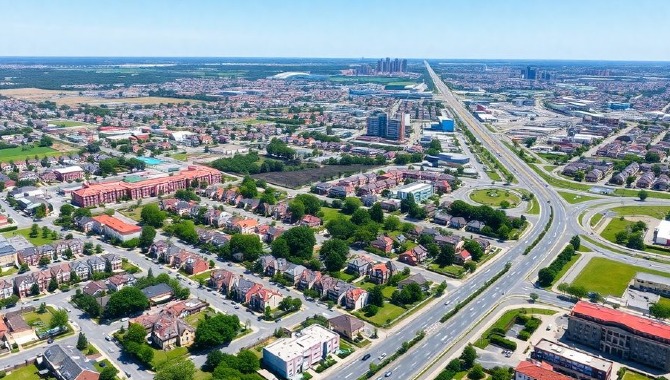
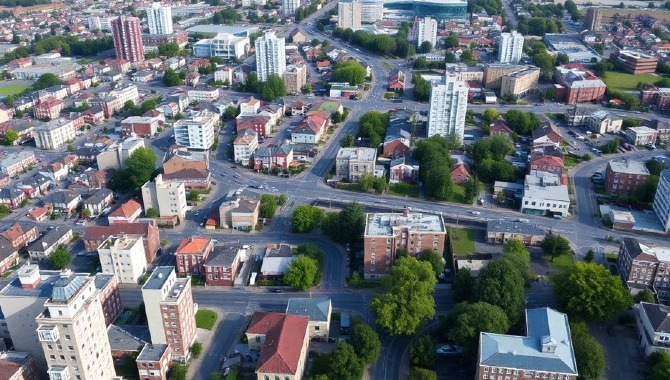
To the West, a new, artificial prosperity is being bolted onto the landscape. The skyscrapers are rising in the ports, the markets are opening, and the American-written laws are being enforced with surgical precision.
But as I walked back to my hotel, I passed a group of children playing near the edge of the restricted zone. They were throwing stones at the distant, blackened line of the minefield—the scar that split their world in two.
"What's over there?" one of them asked, pointing toward the East.
"Your cousins," a nearby soldier replied, his voice devoid of emotion. "And the ghosts of the country you used to live in."
The child stopped throwing stones and looked at the soldier, then at the towering American flags snapping in the wind above the government buildings. The boy didn't ask any more questions. He simply turned and walked away, his small footsteps echoing in a city that had been liberated, partitioned, and rewritten in a single, violent stroke.
West Iran is a triumph of engineering and military will. It is a strategic masterpiece. But as the world watches the oil flow smoothly through the Strait of Hormuz, one cannot help but wonder if the "impenetrable barrier" created by the Golgotha Spikes didn't just divide a country—but created a permanent, festering wound in the heart of the Middle East.
The war is over. The partition is complete. But in the silence of the Western Shore, the echoes of the Great Migration still scream.